
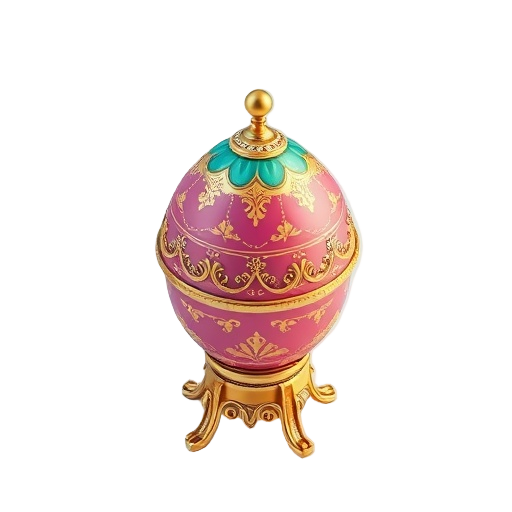
Imperial Fabergé Egg
Jeweled eggs made for Russian royalty between 1885 and 1917.
Estimated value as of 2026 · Source: https://soviet-union.com/faberge-egg
Fun Fact
A scrap metal dealer once bought one at a flea market for $14,000 — it was worth $33 million.
Price History
The Deep-Dive
What's a Imperial Fabergé Egg Worth?
Estimated value: $30.2M
Jeweled eggs made for Russian royalty between 1885 and 1917.
Fun fact: A scrap metal dealer once bought one at a flea market for $14,000 — it was worth $33 million.
The "Imperial Fabergé Egg" you are referencing is the Winter Egg (1913), which set a new world auction record on December 2, 2025, selling for $30.2 million (£22.9 million) at Christie’s in London . While a different egg, the Third Imperial Easter Egg, is privately held with an estimated valuation of $33 million, the Winter Egg remains the most expensive Fabergé object ever sold at public auction .
1. Current Estimated Value and Why
The Winter Egg’s definitive sale price is $30.2 million, surpassing the previous record of $11.7 million (set by the Rothschild Egg in 2007) by over $18 million . Its value is driven by:- Unmatched Craftsmanship: Carved from a single piece of rock crystal (the size of a grapefruit) and encrusted with 4,500 diamonds and platinum snowflakes .
- Rarity: It is one of only 43 surviving Imperial Easter Eggs out of roughly 50 originally made, with only seven remaining in private hands .
- Provenance: Commissioned by Tsar Nicholas II in 1913 for his mother, Dowager Empress Maria Feodorovna, linking it directly to the Romanov dynasty .
2. Historical Price Trends & Notable Sales
The Winter Egg has broken the world record for a Fabergé item three times in its history of public sales: | Year | Location | Sale Price (Approx.) | Record Status | | :--- | :--- | :--- | :--- | | 1994 | Geneva (Christie's) | $14.5M (7.26M CHF) | First world record for a Fabergé item | | 2002 | New York (Christie's) | $9.58M | Second record (note: price fluctuation due to currency/time) | | 2025 | London (Christie's) | $30.2M (£22.9M) | Current world record for any Fabergé object |*Note: The 2007 Rothschild Egg sale of €12.5 million (£8.9 million) was the highest for a decade prior to the 2025 Winter Egg sale .*
3. What Makes It Valuable?
- Rarity: Only 43 of the original 50 Imperial eggs survive; many were lost during the Russian Revolution or dispersed .
- The "Surprise": Imperial eggs were designed to contain a hidden miniature surprise. The Winter Egg’s surprise is a diamond-mounted gold basket filled with tiny rock crystal flowers (though the basket itself is often the focus of the interior engraving) .
- Cultural Significance: It represents the pinnacle of the House of Fabergé’s artistry just four years before the 1917 Russian Revolution, marking the end of the Imperial era .
- Material Innovation: The use of rock crystal is exceptionally difficult to carve without cracking, and the diamond embellishment (4,500 stones) is unprecedented for an egg of this size .
4. Surprising or Fun Facts
1. It Was Once "Lost": The egg vanished for two decades after being purchased by a London jeweler for just £450 in the late 1920s or early 1930s . 2. Anonymous Bidding: The $30.2 million buyer chose to remain anonymous, a common trait in high-stakes luxury art auctions . 3. Bitter Cold Design: Unlike the colorful floral eggs, this one depicts winter; the interior features a frost pattern engraving while the exterior mimics falling snow with platinum snowflakes . 4. Speed of Sale: The final bidding contest for the 2025 auction lasted only three minutes before the hammer fell .5. What Affects Its Price?
- Provenance: Direct ownership by the Romanov family is the single most critical value driver .
- Condition of the "Surprise": An egg with its original, intact surprise commands significantly higher prices than one without; missing surpirses can reduce value by millions .
- Market Trends: The luxury art market has seen a surge in demand for "Russian Imperial" artifacts, with experts predicting any rediscovered missing egg could fetch $20–40 million depending on documentation .
- Public vs. Private: The Third Imperial Easter Egg is valued at $33 million but is privately held, meaning its price is a valuation estimate rather than a realized market transaction .
6. Notable Stories & Controversies
The most dramatic story involves its rediscovery. After being sold for £450 in the 1930s, it passed through English collectors and was completely lost to the public eye until 1994, when it reappeared at Christie’s Geneva auction to shatter records . This "lost treasure" narrative significantly amplified its mystique and final auction price. There are no major controversies regarding its authenticity, but the anonymity of the 2025 buyer has sparked speculation about whether it was acquired by a state entity or a secretive billionaire .The Winter Egg remains the definitive benchmark for Fabergé value, with its $30.2 million sale cementing the House of Fabergé as a dominant force in the ultra-luxury collectibles market .
More in Art & Collectibles

Da Vinci Salvator Mundi
Attributed oil painting of Christ holding a crystal orb, sold for record price in 2017.

Pablo Picasso's 'Les Femmes d'Alger'
A cubist masterpiece from 1955 depicting an odalisque scene in Picasso's characteristic style.

Rembrandt 'Self-Portrait with Two Circles'
17th-century oil painting where the Dutch master depicted himself in contemplative pose.

Rembrandt's 'Storm on the Sea of Galilee'
A masterpiece by the Dutch Golden Age painter stolen in 1990.